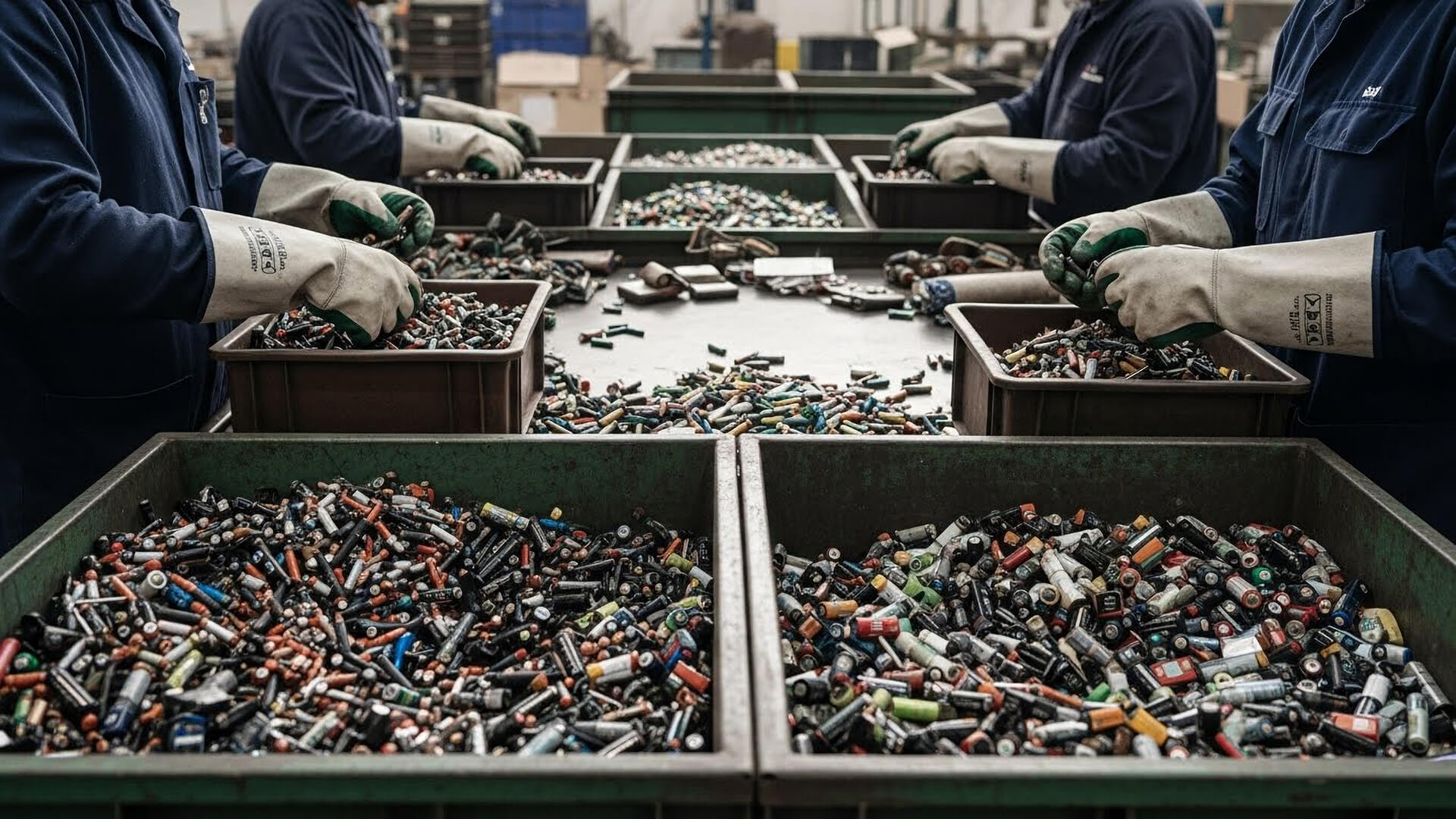

Recent Developments in Lithium Recycling: How Will Battery Waste Impact Energy Markets?
16 January 2026Electric vehicles, renewable energy systems, and energy storage technologies—positioned at the center of the energy transition—have turned lithium into a strategic raw material. However, this transformation is not limited to clean energy production alone; it also brings resource security, waste management, and a circular economy perspective into focus.
At this point, lithium recycling is no longer merely an environmental solution; it has become an economic and geopolitical factor directly influencing energy markets. In particular, battery waste has the potential to reshape the dynamics of energy and raw material markets in the coming years.
This article comprehensively examines recent technological developments in lithium recycling, the growing volume of battery waste, and the impacts of this transformation on energy markets.
The Critical Role of Lithium in the Energy Transition
Thanks to its high energy density and lightweight structure, lithium stands out as a core component of modern battery technologies. Today:
- Electric vehicle batteries
- Grid-scale energy storage systems
- Portable electronic devices
largely rely on lithium-ion batteries.
As the global energy transition accelerates, lithium demand is increasing exponentially. International analyses predict that global lithium demand will multiply several times over the next 20 years. However, this growth raises a critical question:
Can this demand be met sustainably through natural resources?
Battery Waste: The Invisible Massive Wave
The rapid increase in electric vehicle sales is bringing an as-yet largely invisible wave of battery waste.
Why Is Battery Waste Critical?
The average lithium-ion battery lifespan ranges between 8 and 15 years. Millions of electric vehicles sold today will soon translate into:
- High volumes of battery waste
- Valuable metals such as lithium, cobalt, and nickel
- Environmental and economic risks
For this reason, battery waste management has become a strategic cornerstone of the energy transition.
Technological Advances in Lithium Recycling
In recent years, lithium recycling technologies have made significant progress in terms of both efficiency and environmental impact.
Mechanical and Hydrometallurgical Methods
Traditional battery recycling processes generally include:
- Mechanical dismantling of batteries
- Separation of metals
- Chemical purification processes
While these methods enable the recovery of valuable metals, they may create environmental costs due to high energy consumption.
Next-Generation Low-Carbon Technologies
Recently developed low-carbon recycling technologies offer:
- Lower energy consumption
- Reduced chemical usage
- Higher recovery rates
making climate-friendly lithium recycling increasingly viable.
Second Life Batteries: A New Chapter in Energy Storage
Electric vehicle batteries do not become entirely unusable once their primary service life ends.
Second-Life Batteries
These batteries can be repurposed for:
- Grid balancing
- Renewable energy storage
- Industrial energy solutions
This approach reduces battery waste, enhances energy system flexibility, and improves resource efficiency.
Impacts on Energy Markets
Stabilizing Effect on Raw Material Prices
The expansion of lithium recycling:
- Reduces dependence on primary mining
- Mitigates lithium price volatility
- Strengthens energy supply security
This provides greater predictability for electric vehicle and energy storage investments.
Energy Security and the Geopolitical Dimension
The geographic concentration of lithium reserves poses energy security risks. Lithium recycling enables countries to:
- Reduce external dependency
- Strengthen domestic raw material sources
- Enhance national energy security
Regulations and Policy Frameworks
Especially European Union battery regulations—including mandatory recycling targets and extended producer responsibility—are positioning lithium recycling as a strategic policy domain.
Circular Economy and the Energy Transition
The circular economy model transforms waste batteries into secondary raw material sources.
- Battery waste → secondary lithium supply
- Energy storage → system flexibility
- Recycling → reduced carbon footprint
This structure ensures long-term sustainability in energy markets.
Conclusion: Battery Waste Is Redefining Energy Markets
Lithium recycling has become a key driver shaping the future of energy markets.
With well-designed systems:
- Raw material supply security can be ensured
- Energy markets can become more stable
- Carbon emissions can be reduced
- The circular economy can be strengthened
With the right technologies, battery waste can become the driving force of the energy transition, rather than its weakest link.
References
- International Energy Agency (IEA)
Global Supply Chains of EV Batteries
https://www.iea.org/reports/global-supply-chains-of-ev-batteries
- International Energy Agency (IEA)
The Role of Critical Minerals in Clean Energy Transitions
https://www.iea.org/reports/the-role-of-critical-minerals-in-clean-energy-transitions
- European Commission – Joint Research Centre (JRC)
Critical Raw Materials and Circular Economy
https://joint-research-centre.ec.europa.eu/publications_en
- World Economic Forum (WEF)
A Vision for a Sustainable Battery Value Chain in 2030
https://www.weforum.org/reports/a-vision-for-a-sustainable-battery-value-chain-in-2030
- Nature Energy
Lithium-Ion Battery Recycling: A Review of Current Processes and Technologies
https://www.nature.com/articles/s41560-019-0454-7
- ScienceDirect – Journal of Power Sources
Recycling of Lithium-Ion Batteries: Recent Advances and Challenges
https://www.sciencedirect.com/science/article/pii/S0378775322003115
- European Battery Alliance (EBA)
Battery Recycling and Circular Economy in Europe
https://ec.europa.eu/growth/industry/sustainability/batteries_en
- U.S. Department of Energy (DOE)
Lithium-Ion Battery Recycling Prize & R&D Initiatives
https://www.energy.gov/eere/vehicles/lithium-ion-battery-recycling
- McKinsey & Company
Battery Recycling: Defining the Market and the Technology Path
https://www.mckinsey.com/industries/automotive-and-assembly/our-insights/battery-recycling
- Ellen MacArthur Foundation
Circular Economy and the Energy Transition
https://ellenmacarthurfoundation.org/topics/energy/overview