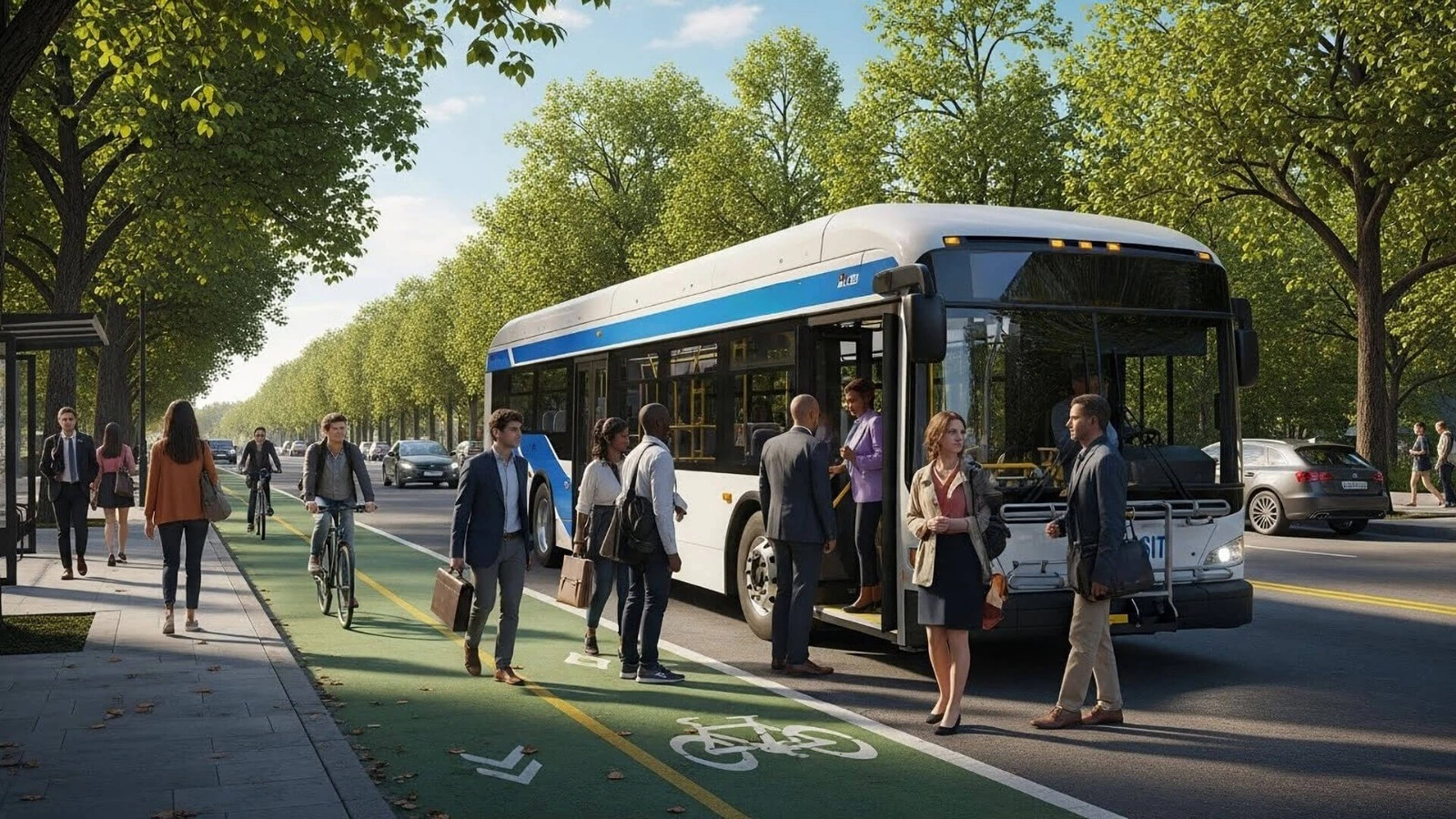

The Silent Energy Revolution in Cities: Electric Public Transportation and the Future of Urban Living
15 May 2026Cities are experiencing one of the greatest transformations in history. As growing populations and increasing traffic turn urban areas into complex systems that require smarter management, sustainable transportation and energy efficiency are becoming the key drivers of this transition. Today, the electrification of public transportation — often referred to as a “silent revolution” — is not merely a shift in vehicle technology; it is a holistic energy transformation strategy that reduces carbon footprints while improving quality of life.
The 15-Minute City Model and Electric Mobility
At the center of modern urban transformation lies the 15-minute city model, which aims to ensure that people can access their essential daily needs within walking or cycling distance. One of the strongest complements to this model is electric public transportation.
- Low Emissions: Electric buses replacing fossil-fuel-powered vehicles directly improve air quality in city centers.
• Human-Scale Cities: Transportation systems designed intelligently and efficiently help cities become more livable and more centered around human experience.
Battery Transformation and Resource Security in Energy Markets
Lithium-ion batteries are at the heart of the electric transportation revolution. However, this transformation also creates a growing need for strategic resource security and advanced waste management.
- Second Life Applications: Batteries that complete their average 8–15-year lifespan in electric vehicles can gain a “second life” through grid balancing and renewable energy storage systems instead of becoming waste.
• Circular Economy: Recycling battery waste allows valuable materials such as lithium and cobalt to re-enter the economy, reducing dependency on raw material imports while strengthening secondary resource markets.
AI-Powered Smart Cities
The electrification of transportation is a process that evolves hand in hand with digitalization. Artificial intelligence (AI) and smart grids play a critical role in optimizing this new energy ecosystem.
- Balancing Energy Supply and Demand: AI algorithms analyze charging schedules and energy consumption of electric vehicle fleets in real time, helping reduce pressure on power grids.
• Data-Driven Decisions: Through sensors and IoT systems, both waste flows and energy production become transparent, traceable, and manageable.
The Biotrend Perspective: Integrated Waste-to-Energy Solutions
At Biotrend, we see this urban transformation not only as a technological shift but also as a comprehensive resource management challenge.
- Circular Development: Renewable energy generated from organic waste can become a clean energy source supporting the electric transportation infrastructure of cities.
• A Sustainable Future: With our integrated approach to waste-to-energy systems and water-energy relationships, we aim to help cities evolve into self-sufficient, carbon-neutral ecosystems.
Conclusion: Cleaner, Quieter, and Smarter Streets
The silent revolution taking place in cities does not only mean less noise and cleaner air in our daily lives. It also represents the real-world implementation of circular economy principles within urban life itself. When electric public transportation, smart energy management, and battery recycling come together, building a more resilient and sustainable world for future generations becomes possible.
Remember: a sustainable future is shaped by the smart decisions we make today.